
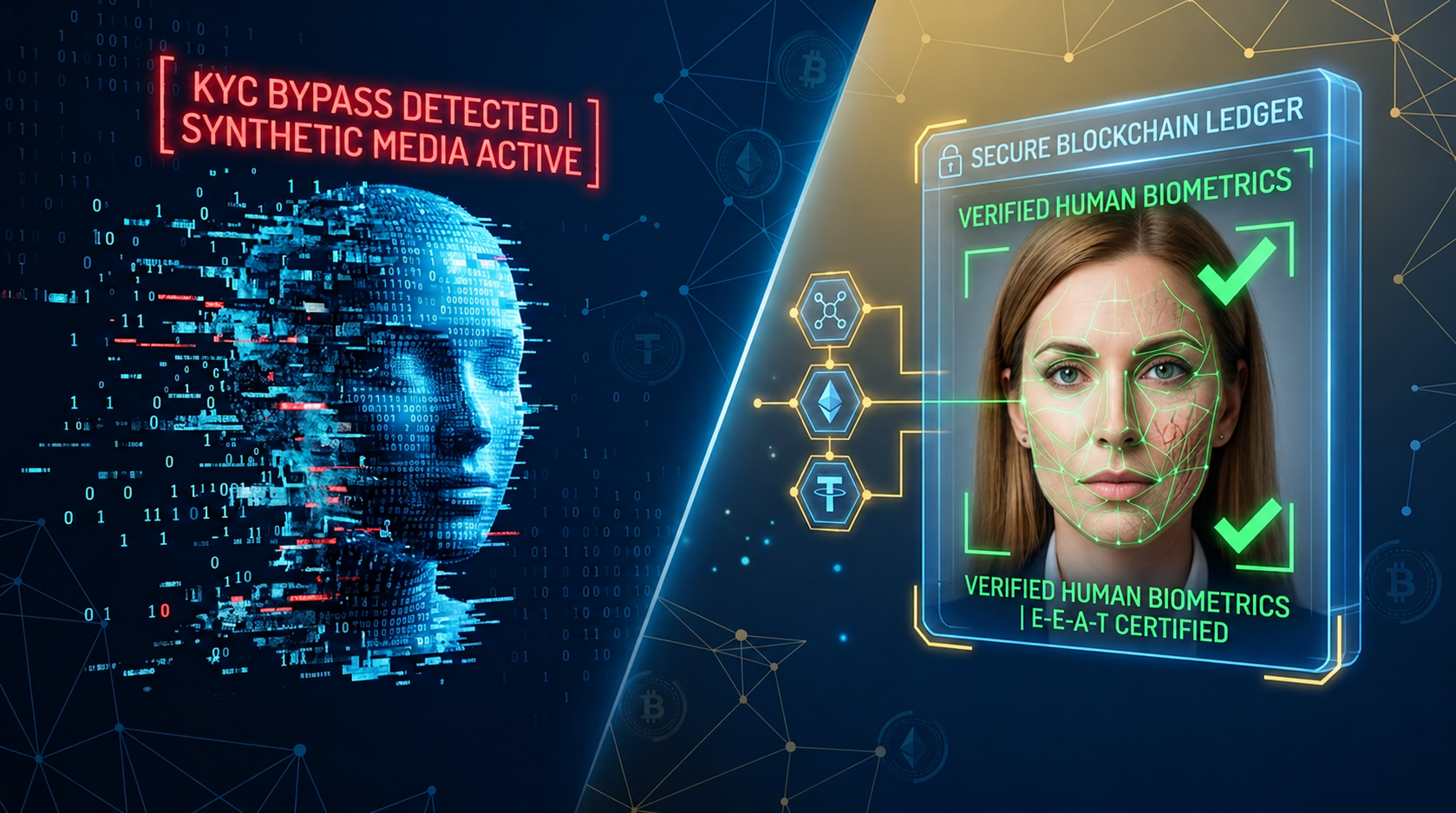
As of May 2026, the digital asset industry has reached a regulatory and technical tipping point. While the GENIUS Act forced stablecoin issuers to modernize their forensic monitoring, a more insidious threat has emerged at the point of entry: Synthetic Media.
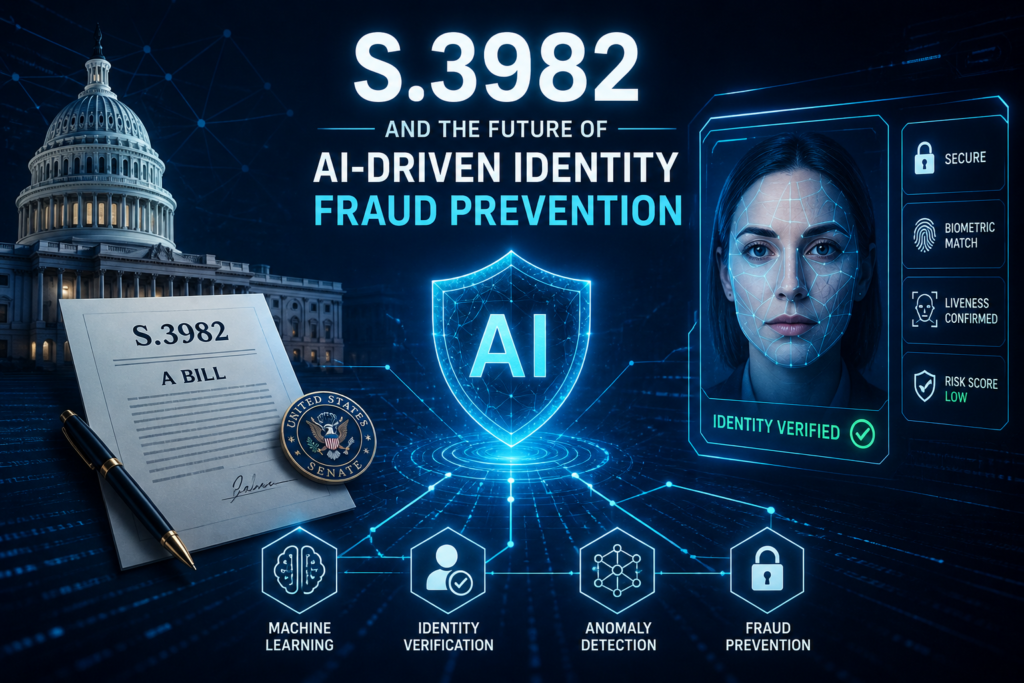
The introduction of the S.3982 – AI Fraud Accountability Act in the U.S. Senate signals the end of “passive” identity verification. For crypto exchanges, iGaming platforms, and fintech gateways, the question is no longer “Did the user provide an ID?” but rather “Is the person behind the screen biologically real?”.
At CoinForensics, we’ve integrated AI-driven identity fraud prevention into our core Case Management suite to address exactly what S.3982 aims to criminalize: the industrialization of deepfake impersonation.
Understanding S.3982: The Federal Crackdown on “Synthetic Deception”
Introduced by Senators Lisa Blunt Rochester and Tim Sheehy, S.3982 is the first piece of federal legislation to explicitly criminalize the use of highly realistic digital impersonations with the intent to defraud.
Unlike previous identity theft statutes, S.3982 targets the technology of generation. It empowers the Federal Trade Commission (FTC) to pursue civil enforcement against platforms that fail to implement “reasonable” safeguards against deepfake injection. For the crypto sector, this means that a “legacy” KYC process—one that merely checks a photo against a database—may soon be legally indefensible.
The Crisis of the “Injection Attack”
In early 2026, the crypto industry saw a 180% surge in “sophisticated fraud.” The most dangerous of these is the injection attack. Fraudsters no longer just hold up a high-res photo to a camera; they use virtual camera software to “inject” a real-time, AI-generated video stream directly into a browser’s media stream.
This is why AI-driven identity fraud prevention must evolve. Legacy systems that rely on “active liveness” (asking a user to blink or turn their head) are now easily bypassed by agentic AI that can perform these tasks in milliseconds.
How CoinForensics Solves the Liveness Gap
Our platform was built on the premise that identity is not a snapshot; it is a behavioral and biological signal. Our AI Identity Verification suite utilizes three layers of defense that align directly with the proposed NIST standards under S.3982:
- Passive Neural Texture Analysis: We analyze micro-movements of skin, light reflection patterns, and blood flow (photoplethysmography) that synthetic media cannot replicate.
- Metadata & Telemetry Auditing: We detect “Virtual Camera” drivers and API tampering at the hardware level, stopping injection attacks before the first frame is even processed.
- Behavioral Biometrics: By analyzing the cadence of interaction—how a user holds their phone or navigates the UI—we create a “Human Probability Score” that unmasks automated AI agents.
Case Management: Turning Flags into Evidence
One of the core requirements of the AI Fraud Accountability Act is the ability for firms to cooperate with international law enforcement. If your platform identifies a deepfake ring operating from an overseas “scam compound,” how do you report it?
This is where the CoinForensics Case Management hub becomes your most valuable asset. Instead of having a disjointed mess of KYC logs and wallet alerts, our hub allows your MLROs to:
- Link a flagged AI-identity attempt to a specific cluster of high-risk wallet addresses.
- Generate an audit-ready “Compliance Narrative” that can be handed directly to the FTC or FinCEN.
- Collaborate internally to ensure that a fraudster who is rejected on one “rail” cannot re-enter through another.
The ROI of Proactive Compliance
Beyond avoiding federal fines under S.3982, implementing robust AI-driven identity fraud prevention has a direct impact on your bottom line.
- Reduced Manual Review: By automating the detection of synthetic IDs, your compliance team can focus on complex investigations rather than squinting at blurry selfies.
- Lower Chargebacks: Deepfake fraud is almost always linked to stolen credit cards or unauthorized ACH transfers. Stopping the fake ID stops the financial loss.
- Institutional Trust: As banking partners become more risk-averse in 2026, showing that you use CoinForensics—a platform that stays ahead of Senate mandates—makes your business “bankable.”
The Future: From “Know Your Customer” to “Know Your Human”
The regulatory landscape of 2026 is clear: the burden of proof has shifted. Regulators now expect platforms to treat every digital interaction as “guilty until proven human.”
The S.3982 AI Fraud Accountability Act is not just another hurdle; it is a roadmap for the future of digital trust. By adopting AI-driven identity fraud prevention, you aren’t just checking a box for a regulator—you are building a fortress around your brand.
At CoinForensics, we are committed to providing the tools that make this transition seamless. Whether it’s through our real-time screening APIs or our institutional Case Management hub, we ensure your platform is 2026-ready today.
Conclusion: Don’t Wait for the Audit
The Senate is moving faster than most fintechs realize. The transition from “innovation” to “accountability” is happening in real-time. If your current compliance stack can’t tell the difference between a real customer and an AI injection, you are sitting on a liability.
Ready to see the future of identity security? Contact us at CoinForensics to schedule a demo of our AI Identity Verification suite and see how we integrate seamlessly with your existing workflow.




Leave a Reply